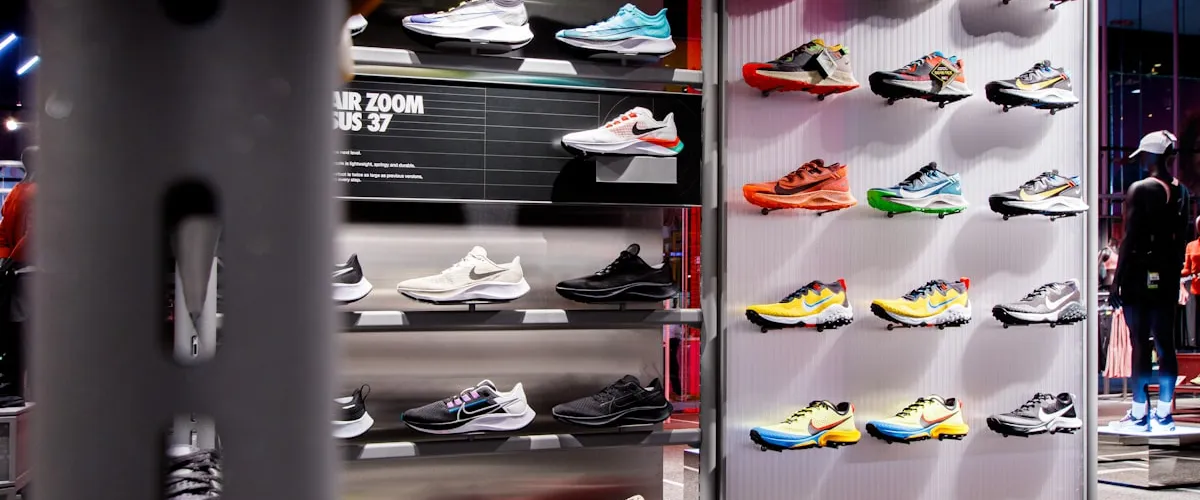
Sneaker Con is the largest sneaker convention in the world, and attending one for the first time can be overwhelming. Thousands of pairs of shoes spread across hundreds of tables, sellers ranging from teenagers with a few pairs to professional dealers with six-figure inventories, and a crowd of collectors all hunting for the same grails. This guide prepares you for everything you will encounter, from pre-event planning to negotiation tactics to authentication on the spot.
What Is Sneaker Con?
Sneaker Con started in 2009 in New York City and has grown into a global event series with conventions in major cities across the United States and internationally. The concept is straightforward: sellers rent table space to display and sell sneakers, and buyers pay admission to browse and purchase.
Sneaker Con Event Format
| Element | Details |
|---|---|
| Admission | $25–$40 general admission, $50–$100 for early access |
| Duration | One day, typically 12:00 PM – 7:00 PM (early access starts at 10:00 AM) |
| Sellers | 200–500+ vendors per event |
| Attendance | 3,000–10,000+ attendees per event |
| Authentication | Free Legit Check station at every event |
| Payment | Cash, Venmo, PayPal, Zelle, Cash App accepted by most sellers |
Where Sneaker Con Events Happen
Sneaker Con rotates through major cities throughout the year:
- New York City — The flagship event, largest attendance and vendor count
- Los Angeles — West Coast flagship, strong representation of West Coast exclusives
- Houston — Growing market, excellent deals due to lower cost of living
- Cleveland — Midwest hub, often has great deals due to lower attendance
- London — European flagship event
- Melbourne — Australia and New Zealand hub
- Fort Lauderdale, Atlanta, Dallas, Chicago — Regular rotation cities
Pre-Event Preparation
Walking into Sneaker Con without preparation is like entering a Nike SNKRS draw without saving your payment method. Planning before the event dramatically improves your experience and your deals.
Set Your Budget
Before anything else, determine your spending limit:
- Casual browsing: $200–$500 covers 1-2 pairs at fair market value
- Serious shopping: $500–$1,500 allows for 2-4 quality pickups depending on models
- Grail hunting: $1,500+ for high-demand OG colorways, rare collaborations, or deadstock vintage
- Bring 20% more than your target budget in case you find an unexpected deal
- Always keep $50 in reserve for food, transportation, and emergency expenses
Create a Hit List
Research what you want before the event:
- Identify 3-5 target pairs ranked by priority
- Check current resale prices on StockX and GOAT for each pair — this is your baseline for negotiation
- Know your sizes in each brand and model — reference our sneaker sizing guide if uncertain
- Note acceptable conditions — Are you willing to buy used? What level of wear is acceptable?
- Have backup targets — If your primary targets are not available, know what else interests you
What to Bring
Pack these items for the event:
- Cash — King at Sneaker Con. Most sellers prefer cash and will offer a discount for it
- Phone with payment apps — Venmo, PayPal, Zelle, and Cash App as backup payment methods
- A portable phone charger — Your phone is your research tool and payment device; a dead battery kills your buying power
- A backpack or large bag — You need something to carry your purchases safely
- Comfortable shoes you do not mind standing in for hours — Ironic at a sneaker convention, but your feet will thank you
- A UV flashlight — Useful for on-the-spot authentication checks
- Your hit list — Written down or saved in your phone’s notes
Navigating the Convention Floor
Sneaker Con can feel chaotic when you walk in. Having a strategy for how you move through the space maximizes your time and deal quality.
The First-Pass Strategy
Do not buy anything on your first loop through the convention:
- Walk the entire floor first — Get a complete picture of what is available and at what prices
- Note table numbers or locations of sellers who have your target pairs
- Compare prices across multiple sellers for the same shoe
- Identify sellers who seem flexible — Body language and engagement level signal negotiation willingness
- Return to your top options after the full loop with price intelligence from multiple sellers
Timing Your Purchases
When you buy matters almost as much as what you buy:
| Time Window | Advantage | Disadvantage |
|---|---|---|
| Early access (10:00 AM) | First pick of inventory, best selection | Highest prices, sellers are firm |
| Opening hour (12:00-1:00 PM) | Good selection, moderate crowds | Prices still at peak |
| Mid-day (1:00-3:00 PM) | Sellers warming up to deals, moderate selection | Peak crowd density |
| Late afternoon (3:00-5:00 PM) | Sellers starting to negotiate more | Inventory thinning |
| Final hours (5:00-7:00 PM) | Best deals — sellers want to avoid packing inventory | Limited selection, best items gone |
The sweet spot for most buyers is 3:00-5:00 PM. Selection is still reasonable, and sellers have been standing behind their tables for hours and are increasingly motivated to make sales rather than pack up unsold inventory.
Negotiation Strategies
Negotiation is expected and encouraged at Sneaker Con. Sellers build margin into their prices anticipating that buyers will negotiate.
The Fundamentals
- Always ask “What’s your best price?” — This opens negotiation without being aggressive
- Start your counter-offer at 15-20% below their asking price — This gives room for both sides to meet in the middle
- Use market data — Showing a StockX or GOAT listing on your phone establishes an objective baseline
- Bundle purchases — Buying 2+ pairs from the same seller almost always unlocks a discount
- Cash discount — Offer cash and explicitly ask if there is a cash discount; most sellers will take 5-10% off
Advanced Negotiation Tactics
Once you are comfortable with the basics:
- The walk-away — Politely thank the seller and start walking. If they are willing to deal, they will call you back or drop their price
- End-of-day leverage — After 4:00 PM, mention that you will be back at the end of the day if the price drops. Sellers remember this and often hold pairs
- Condition-based discounting — If a shoe has any flaws (yellowing, creasing, box damage), use these as specific justification for a lower price
- Cross-vendor competition — If two sellers have the same shoe, mention the other seller’s price (honestly) and ask if they can beat it
- The bundled trade-in — If you brought pairs to trade or sell, offer a package deal combining cash and trade items
What Not to Do
Certain behaviors will shut down negotiation and earn you a reputation:
- Do not lowball aggressively — Offering 50% of asking price is disrespectful and sellers will refuse to deal with you
- Do not pretend to find flaws that do not exist to justify lower prices
- Do not hover at a table without engaging — Either ask about shoes or move on
- Do not bad-mouth other sellers to get a better price
- Do not commit to a price and then try to negotiate lower at the point of payment
Authentication at Sneaker Con
Fake sneakers are present at every convention, no matter how reputable the event. Protecting yourself requires both knowledge and the available authentication resources.
Using the Legit Check Station
Every Sneaker Con event has a free authentication station:
- Bring any pair you are considering buying to the station before finalizing the purchase
- The process takes 5-15 minutes depending on the queue
- Authenticators check materials, stitching, shape, insole printing, box labels, and other model-specific tells
- Ask the seller to hold the pair while you get it checked — legitimate sellers will agree without hesitation
- If a seller refuses a legit check, walk away immediately
DIY Authentication Checks
For quick checks at the table before committing to the legit check line:
- Check the box label — Style code, size, and colorway name should match the shoe exactly
- Examine the stitching — Consistent, tight stitching without loose threads or uneven spacing
- Feel the materials — Authentic Nike leather, for example, has a distinct softness and grain pattern that replicas cannot match
- Compare both shoes — Fakes often have slight asymmetry between the left and right shoe
- Check the insole — Pull back the insole and check for printing quality and placement
- UV flashlight test — Counterfeit glue application often glows differently under UV light
For a comprehensive authentication guide, read our detailed breakdown on how to spot fake sneakers.
Buying Used vs. Deadstock
One of the biggest decisions at Sneaker Con is whether to buy used or deadstock (never worn) pairs. Both have legitimate places in a collection.
Condition Grading System
Sneaker Con uses an informal grading system that most sellers and buyers understand:
| Grade | Description | Typical Discount vs. DS |
|---|---|---|
| DS (Deadstock) | Never worn, all tags, original box | Full market price |
| VNDS (Very Near Deadstock) | Tried on or worn once, no visible signs | 5-15% below DS |
| 9/10 | Worn a few times, minimal creasing, clean | 20-30% below DS |
| 8/10 | Moderate wear, visible creasing, light scuffs | 35-50% below DS |
| 7/10 | Noticeable wear, sole yellowing, midsole creasing | 50-65% below DS |
| 6/10 or below | Heavy wear, visible damage | 65%+ below DS |
When Used Pairs Make Sense
Buying used is strategically smart in several scenarios:
- Grail hunting — Some shoes simply do not exist in deadstock condition anymore. A used OG pair may be the only option
- Daily wearers — If you plan to wear the shoe regularly, paying DS price for something you will crease anyway is wasteful
- Budget optimization — A 9/10 pair at 25% off is often indistinguishable from DS on foot
- Vintage and retro — Older retro releases develop character with wear that many collectors value
When to Insist on Deadstock
- Investment purchases — If resale value matters, DS commands the highest prices
- Gifts — Nobody wants to receive a used pair as a gift
- OG colorways with known quality issues — Some used pairs have sole separation or midsole crumbling that is not visible until worn
Selling at Sneaker Con
If you plan to sell alongside buying, Sneaker Con offers opportunities to fund your purchases on the spot.
Selling Without a Table
You do not need a vendor table to sell at Sneaker Con:
- Wear or carry the pairs you want to sell — Other attendees and vendors will approach you if they are interested
- Price your pairs competitively — You are competing with hundreds of vendors with larger inventories
- Be open to trades — The trade culture at Sneaker Con is active, and trades can net you value that pure cash transactions cannot
- Use cash from sales to fund purchases — This is the most efficient way to upgrade your collection without net spending
Setting Up as a Vendor
If you have 10+ pairs to sell, consider renting a table:
- Table costs range from $200–$500 depending on the event and table size
- You need to sell 2-4 pairs at typical margins to cover your table cost
- Bring a display setup — Stackable shoe risers and clear boxes help attract buyers
- Bring signage with your Instagram or resale platform handles for post-event sales
- Bring change — Small bills and coins for cash transactions
Sneaker Con Etiquette
Understanding the unwritten rules makes your experience better and earns respect from the community.
Do
- Ask before picking up shoes from a vendor’s table
- Return shoes to the exact position you found them
- Be honest about a shoe’s condition if you are selling
- Respect negotiation outcomes — if you agree on a price, honor it
- Thank sellers even if you do not buy
Do Not
- Take photos of a seller’s entire table without asking
- Touch shoes with dirty hands
- Block walkways while examining pairs
- Pressure sellers into deals they have clearly declined
- Bring outside food or drinks near vendor tables
Planning Around Sneaker Con for Maximum Value
Sneaker Con can be part of a broader sneaker shopping strategy when you plan ahead.
Pre-Event Market Research
In the two weeks before a Sneaker Con event:
- Check resale prices on your target pairs across multiple platforms
- Note which sizes are trading lowest — size premiums fluctuate
- Read recent resale market trend reports to understand where prices are heading
- Set maximum buy prices for each target pair and stick to them at the event
- Identify pairs you own that you could trade — bring them along
Post-Event Follow-Up
After the event:
- Connect with sellers on Instagram — Many sellers offer post-event deals on inventory they could not sell at the convention
- List any regret purchases on StockX or GOAT quickly — resale prices often fluctuate after large convention events
- Document your purchases — Photograph everything for insurance and collection tracking purposes
- Leave reviews if the event solicits feedback — this helps improve future events
FAQ
Is Sneaker Con worth the admission price?
Yes, especially if you are buying. The $25-$40 general admission fee pays for itself through negotiation savings on a single pair. Early access tickets ($50-$100) are worth the premium if you are hunting rare or high-demand pairs, as the best inventory gets picked through within the first two hours. Even if you are not buying, the experience of seeing thousands of rare sneakers in person and connecting with the community has value that justifies the ticket price.
Can I get scammed at Sneaker Con?
While Sneaker Con has authentication measures in place, scams can still occur. The most common issues are sellers misrepresenting the condition of shoes (claiming DS when they have been worn) and, less commonly, counterfeit pairs slipping past initial inspection. Protect yourself by using the free legit check station, inspecting shoes carefully before paying, and using traceable payment methods like Venmo or PayPal that offer buyer protection. Cash transactions have no recourse if something goes wrong.
What is the best Sneaker Con event to attend?
The New York City Sneaker Con is the largest and most significant event, with the highest vendor count and greatest variety of inventory. However, mid-market events in cities like Cleveland, Houston, and Atlanta often offer better deals because there is less competition from buyers and sellers are more willing to negotiate. If maximizing deal quality is your priority, choose a smaller-market event over the NYC flagship.
Should I bring sneakers to trade at Sneaker Con?
Absolutely. Trading is a core part of the Sneaker Con experience and can help you acquire pairs without spending additional cash. Bring pairs that are clean, properly authenticated, and priced at current market value. Be prepared to add cash on top of trades to bridge value gaps. The most successful traders bring 3-5 pairs in popular sizes (9-11) in models with broad appeal like Jordan 1s, Dunks, and New Balance 550s.
How early should I arrive at Sneaker Con?
For general admission, arrive 30-45 minutes before doors open to avoid the longest lines. For early access, arrive right at the early access time (typically 10:00 AM) since there is usually minimal waiting. If you are a vendor, arrive during the designated vendor setup window, typically 2-3 hours before general admission opens. Arriving in the final two hours of the event gets you the best deals but the worst selection.