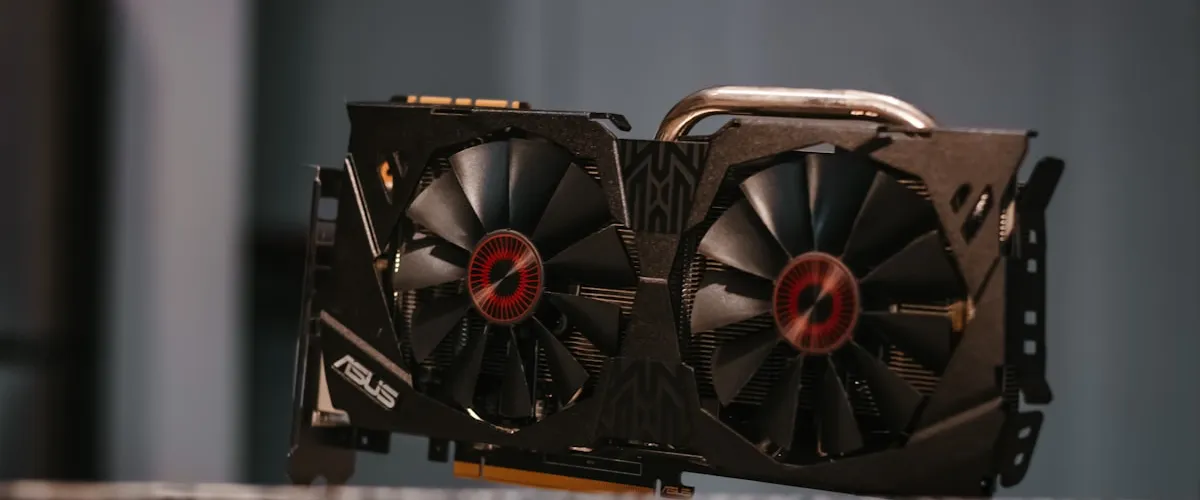
The GPU shortage of 2020-2022 was the defining event that transformed restocking from a niche sneakerhead practice into a mainstream consumer survival skill. For nearly two years, graphics cards were virtually impossible to buy at retail price. The NVIDIA RTX 3080, which launched at $699 MSRP, routinely sold for $1,500-2,000 on the secondary market. The AMD Radeon RX 6800 XT, priced at $649, commanded similar premiums. What made gamers, content creators, and PC builders suddenly unable to buy a video card? The answer sits at the intersection of cryptocurrency mining, pandemic-era supply chain disruptions, and a surge in demand that caught an entire industry off guard.
This article traces the full history of how crypto mining affected GPU restocks, the tactics that emerged to fight the shortage, and the lasting changes it left on how retailers and consumers approach high-demand product launches.
The First GPU Mining Boom: 2017-2018
Cryptocurrency mining’s impact on GPU supply did not start with the pandemic. The first major GPU shortage driven by mining occurred during the 2017-2018 crypto bull run when Bitcoin surged to nearly $20,000 and Ethereum launched a wave of interest in GPU-mineable cryptocurrencies.
What Happened
During this period:
- Ethereum mining profitability spiked. Ethereum (ETH) was specifically designed to be GPU-mineable, and as its price rose from $10 to over $1,000 in 2017, mining became enormously profitable.
- Miners bought GPUs in bulk. Mining farms purchased hundreds of GPUs at a time, stripping retail channels of stock.
- Prices more than doubled. The NVIDIA GTX 1060 and 1070, which were popular mining cards, saw prices rise from $250/$400 to $500/$700+.
- Gamers were locked out. PC gamers, the primary intended customer for GPUs, could not find cards at any reasonable price.
The Industry Response
GPU manufacturers and retailers responded, but slowly:
| Response | Who | Impact |
|---|---|---|
| Increased production | NVIDIA, AMD | Moderate — factories were already near capacity |
| One-per-customer limits | Best Buy, Newegg | Low — miners used multiple accounts and addresses |
| Mining-specific GPUs | NVIDIA (CMP line) | Very Low — miners preferred standard GPUs for resale value |
| CAPTCHA and bot detection | Online retailers | Moderate — slowed bots but did not stop them |
This first mining boom subsided when crypto prices crashed in early 2018, and GPU prices returned to normal within months. But the episode foreshadowed what was coming.
The Perfect Storm: 2020-2022
The second GPU mining crisis was far worse than the first, amplified by multiple simultaneous factors that created a shortage of historic proportions.
Contributing Factors
| Factor | Impact on GPU Supply |
|---|---|
| COVID-19 pandemic | Factory shutdowns, shipping delays, reduced production capacity |
| Work-from-home demand | Millions of people needed new PCs, increasing general GPU demand |
| Gaming surge | Lockdowns drove massive gaming adoption, increasing GPU demand further |
| Crypto mining boom | Ethereum price surged from $100 to $4,800, making mining hugely profitable |
| Semiconductor shortage | Global chip shortage affected all electronics, not just GPUs |
| Scalper operations | Sophisticated bot networks bought available stock for resale |
| New console launches | PS5 and Xbox Series X competed for the same semiconductor capacity |
Timeline of the Crisis
September 2020 — NVIDIA RTX 3080 Launch
The RTX 3080 launched at $699 MSRP on September 17, 2020. It sold out worldwide in seconds. Bot networks had been programmed to purchase from every major retailer the moment stock went live. The card that was supposed to bring high-end gaming to a broader audience instead became a symbol of everything broken about product launches.
Within hours, RTX 3080 cards appeared on eBay and StockX at $1,200-1,500. Within weeks, prices climbed to $1,800-2,000.
October 2020 — RTX 3070 and RTX 3090 Follow
The RTX 3070 ($499 MSRP) and RTX 3090 ($1,499 MSRP) launched to the same conditions. Neither could be purchased at retail by normal consumers. The RTX 3070 was particularly devastating because it was positioned as the “mainstream” high-performance card, yet it was immediately out of reach.
November 2020 — AMD Radeon RX 6800 Series
AMD’s competing GPUs launched in November 2020 with the same result. Despite AMD’s promise that stock would be better than NVIDIA’s launch, the RX 6800 and RX 6800 XT sold out instantly. AMD’s direct sales through their website also collapsed under traffic.
January-March 2021 — Mining Profitability Peaks
As Ethereum’s price rose through early 2021, GPU mining profitability reached levels where a single GPU could pay for itself in 2-4 months. This incentivized mining operations to buy every available GPU at any price, even above MSRP, because the return on investment was guaranteed by mining revenue.
Mid 2021 — Retailer Countermeasures
Retailers began implementing aggressive anti-scalping measures:
- Best Buy moved GPU sales to in-store only, requiring customers to queue in person
- Newegg launched the Newegg Shuffle, a raffle system for purchasing high-demand GPUs
- EVGA implemented a queue system on their website
- Micro Center required in-person purchases with one-per-household limits
These countermeasures are documented in detail in our anti-bot systems guide.
September 2022 — Ethereum Merge
The single event that effectively ended the GPU mining crisis was Ethereum’s “Merge,” which transitioned Ethereum from Proof of Work (GPU mining) to Proof of Stake (no mining required). On September 15, 2022, GPU mining of Ethereum became impossible overnight.
How the Mining Crisis Changed Restocking Culture
The GPU shortage fundamentally changed how people approach product restocking. Before the crisis, restocking was primarily a sneaker culture phenomenon. After it, restocking became a mainstream consumer skill.
The Rise of Restock Communities
During the GPU shortage, dedicated communities emerged specifically to help normal consumers buy GPUs at retail:
- Discord servers dedicated to GPU restock alerts grew to hundreds of thousands of members
- Twitter/X restock accounts gained massive followings by posting real-time GPU stock alerts
- YouTube and Twitch streams that monitored GPU stock in real time attracted thousands of concurrent viewers
- Reddit communities like r/buildapcsales became essential resources for stock-checking
These communities pioneered many of the restock monitoring techniques that are now standard practice across all product categories. Our Discord restock alerts guide traces many of its recommendations back to techniques developed during the GPU crisis.
The Bot Arms Race
The GPU shortage escalated the bot vs. retailer arms race to a new level:
| Era | Bot Capability | Retailer Defense |
|---|---|---|
| Pre-2020 | Simple auto-checkout scripts | CAPTCHA, basic rate limiting |
| 2020-2021 | Multi-session bots, address jigging, proxy rotation | Queue systems, raffles, in-store only |
| 2022-2023 | AI-powered CAPTCHA solvers, residential proxies | Device fingerprinting, purchase history analysis |
| 2024-present | Sophisticated human-like browsing patterns | Real-time behavior analysis, multi-factor verification |
Each escalation by bots prompted a corresponding escalation by retailers, creating the sophisticated anti-bot systems that now protect GPU launches, sneaker drops, and console restocks alike.
Restock Monitoring as a Skill
Before the GPU crisis, checking for product restocks meant occasionally refreshing a webpage. The crisis forced consumers to develop sophisticated monitoring systems:
- Multi-source alert setups pulling from Discord, Twitter, browser monitors, and retailer apps simultaneously
- Instant checkout optimization with pre-saved payment methods, autofill configurations, and practiced checkout flows
- Schedule management with restock calendars tracking known drop times across multiple retailers
- Community intelligence sharing real-time information about stock levels, queue positions, and retailer behavior
These are now fundamental restocking skills used across every product category. Our beginner’s guide to restocking teaches these exact techniques.
The Newegg Shuffle: A Case Study
The Newegg Shuffle deserves special attention as one of the most significant retailer innovations to emerge from the GPU crisis.
What It Was
Launched in early 2021, the Newegg Shuffle was a raffle-based purchasing system. Instead of a FCFS model where the fastest clicker wins, the Shuffle randomly selected winners from a pool of entries.
How It Worked
- Newegg posted a selection of GPUs (often bundled with less desirable products like power supplies or motherboards) each day
- Customers entered the Shuffle during a window (typically 2-3 hours)
- Newegg randomly selected winners
- Winners had a limited time to complete their purchase
- If a winner did not purchase, the next person in the random queue was offered the chance
Impact and Criticism
| Aspect | Positive | Negative |
|---|---|---|
| Fairness | Random selection gave everyone equal odds | Forced bundles included unwanted products at inflated prices |
| Bot prevention | Raffles are harder to bot than FCFS | Some sophisticated bots could still enter multiple times |
| Customer experience | No need to sit and refresh for hours | Low win rates (often less than 5%) led to frustration |
| Revenue | Bundles increased Newegg’s revenue per unit | Customers felt exploited by mandatory bundles |
The Shuffle was controversial but influential. Its raffle model has since been adopted by other retailers and brands for high-demand product launches. For context on how raffle systems have evolved, see our sneaker raffle strategy guide, which covers the raffle model in depth.
Post-Mining: The GPU Market Recovery
After the Ethereum Merge in September 2022, the GPU market underwent a rapid transformation.
The Used GPU Flood
Millions of GPUs that had been running in mining operations 24/7 for months or years suddenly became surplus inventory. Mining farm operators began selling their used GPUs on eBay, Facebook Marketplace, and Craigslist at steep discounts.
The risk: Mining GPUs had been running at full load, often in hot and dusty environments, for their entire lifespan. While GPUs are generally durable, the thermal cycling and fan wear from continuous mining operation means these cards may have reduced remaining lifespan.
The opportunity: Used mining GPUs, particularly the RTX 3070 and RTX 3080, were available at 40-60% below retail. For budget-conscious buyers willing to accept the risk, these were exceptional deals.
Price Normalization
| GPU | Peak Scalper Price (2021) | MSRP | Post-Mining Price (Late 2022) | Price Decline |
|---|---|---|---|---|
| RTX 3060 Ti | $900-1,100 | $399 | $300-350 | 65-70% |
| RTX 3070 | $1,200-1,500 | $499 | $350-400 | 70-75% |
| RTX 3080 | $1,800-2,200 | $699 | $500-600 | 70-75% |
| RTX 3090 | $2,500-3,000 | $1,499 | $800-1,000 | 65-70% |
| RX 6800 XT | $1,200-1,500 | $649 | $400-500 | 65-70% |
New Generation Launches
The NVIDIA RTX 40-series (launched October 2022) and AMD Radeon RX 7000 series (launched December 2022) launched into a very different market. With mining demand eliminated, these launches had significantly better stock availability. While some initial sellouts occurred, prices normalized to MSRP within weeks rather than years.
The RTX 50-series launch in 2025 showed that the industry had learned from the crisis, with improved initial stock quantities and better anti-bot measures, though demand for the RTX 5090 and RTX 5080 still created temporary shortages. For current GPU tracking, see our RTX 5090 restock tracker.
Lessons for Today’s Restockers
The GPU mining crisis taught the restocking community several enduring lessons:
1. Diversify Your Purchase Channels
Relying on a single retailer means relying on a single point of failure. During the GPU crisis, buyers who monitored multiple retailers (Best Buy, Newegg, Amazon, Micro Center, EVGA direct, AMD direct) had far higher success rates than those who only checked one.
2. In-Person Purchases Can Beat Online Bots
Best Buy’s shift to in-store-only GPU sales was one of the most effective anti-bot measures of the crisis. Showing up physically eliminated bot competition entirely. Today, in-store drops for sneakers, consoles, and other high-demand items remain a viable strategy that many online-only restockers overlook.
3. Patience Is a Strategy
Many consumers paid $1,500+ for an RTX 3080 in 2021 that was worth $500 by late 2022. Patience, while painful, would have saved them $1,000+. Unless you need a product immediately for income-generating purposes, waiting for supply to normalize is often the financially optimal choice.
4. Manufacturer Response Is Slow
Both NVIDIA and AMD were slow to respond to the mining-driven demand surge. Semiconductor manufacturing cannot scale quickly (new fab capacity takes 2-3 years to build). When demand outstrips supply, the gap can persist for years.
5. Market Dynamics Can Shift Suddenly
The Ethereum Merge overnight eliminated the primary source of abnormal GPU demand. Anyone who bought a GPU at peak scalper prices just weeks before the Merge overpaid dramatically. External events outside your control can reshape markets rapidly.
Could It Happen Again?
The question on every PC builder’s mind: could another mining-driven GPU shortage occur?
Factors That Reduce Risk
- Ethereum no longer requires mining. The largest GPU-mineable cryptocurrency has permanently moved to Proof of Stake.
- ASIC miners dominate remaining Proof of Work coins. Most remaining mineable cryptocurrencies (Bitcoin included) use specialized ASIC hardware, not GPUs.
- Retailers have better defenses. The anti-bot and anti-scalper systems developed during the crisis remain in place.
- Manufacturers plan for demand spikes. NVIDIA and AMD now factor potential mining demand into their production planning.
Factors That Increase Risk
- New GPU-mineable cryptocurrencies could emerge. If a new project specifically targets GPU mining and gains significant value, mining demand could resurge.
- AI training demand. Consumer GPUs are increasingly used for AI model training and inference. A spike in consumer AI demand could create a different type of GPU shortage.
- Geopolitical semiconductor risks. Most advanced semiconductor manufacturing occurs in Taiwan (TSMC). Geopolitical instability could disrupt supply regardless of demand factors.
- Natural disasters. Earthquakes, fires, or other events at key manufacturing facilities could constrain supply suddenly.
The most likely scenario is that GPU availability will remain generally healthy for gaming and consumer use, but individual high-demand models (like the RTX 5090 at launch) will continue to experience brief shortages that require restocking skills to navigate.
FAQ
Did crypto mining permanently damage the GPU market?
The mining boom did not permanently damage the GPU market, but it permanently changed how GPUs are sold. Retailers now use queue systems, purchase limits, and anti-bot technology that did not exist before 2020. GPU manufacturers have also adjusted pricing strategies, with the average selling price of high-end GPUs rising significantly (the RTX 4090 launched at $1,599 vs. the RTX 3090’s $1,499). Whether mining caused or merely coincided with this price increase is debated.
Is it safe to buy a GPU that was used for mining?
It depends on your risk tolerance. Mining GPUs ran at full load 24/7, which accelerates wear on fans, thermal paste, and capacitors. However, many mining GPUs were actually undervolted (run below maximum power) for efficiency, which reduces some wear. If you buy a used mining GPU, replace the thermal paste, inspect the fans, and test it thoroughly. The GPU chip itself is generally durable and unlikely to fail from mining use alone. The main risk is fan failure and degraded thermal paste, both of which are fixable.
Why did NVIDIA create mining-specific GPUs (CMP) if they did not solve the problem?
NVIDIA’s CMP (Cryptocurrency Mining Processor) cards were designed without display outputs and were positioned as dedicated mining hardware. The idea was to redirect miners from buying gaming GPUs. In practice, miners overwhelmingly preferred standard GeForce GPUs because they retained resale value after mining profitability declined. A used RTX 3070 can be sold to a gamer for hundreds of dollars; a used CMP card has almost no resale value. CMP was more of a PR move than a practical solution.
How did the Newegg Shuffle work, and was it fair?
The Newegg Shuffle was a daily raffle where customers could enter to win the opportunity to purchase high-demand GPUs. Entries were free and randomly selected. While the random selection was fairer than FCFS (which favored bots), the Shuffle was criticized for bundling GPUs with overpriced accessories that customers did not want, effectively raising the GPU’s price above MSRP. Newegg discontinued the Shuffle after GPU stock normalized in late 2022.
What should I do if another GPU shortage happens?
Sign up for restock alert Discord servers and Twitter accounts immediately. Create accounts and save payment methods on every major GPU retailer (Best Buy, Newegg, Amazon, Micro Center, EVGA/manufacturer direct). Consider in-store purchasing if you live near a Best Buy or Micro Center. Set realistic expectations about timeline. And most importantly, assess whether you truly need the GPU now or whether you can wait for supply to improve. During the 2020-2022 shortage, those who waited ultimately spent far less than those who paid scalper premiums.