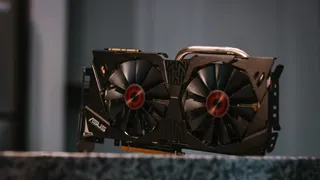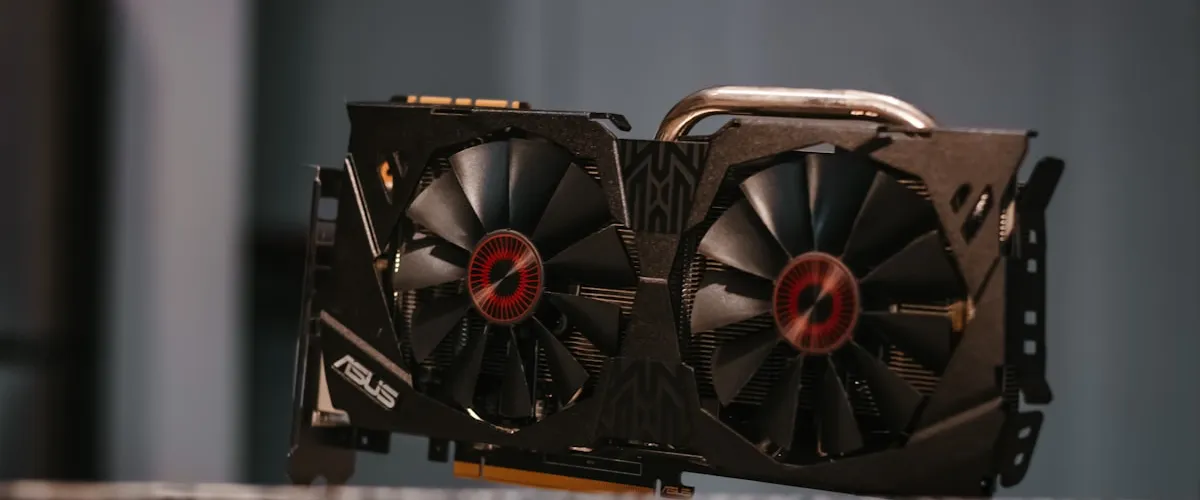
AMD’s Radeon RX 9070 XT has emerged as the most compelling budget GPU option in 2026. With 16GB of VRAM, competitive raster performance, and an MSRP of $549, it offers serious competition to NVIDIA’s RTX 5070 while being noticeably easier to find in stock. If you are a gamer who prioritizes value over brand loyalty, the RX 9070 XT deserves your attention. This guide covers where to find it, when restocks happen, and whether it is the right card for your build.
Why the RX 9070 XT Is the Budget Pick
AMD has positioned the RX 9070 XT to compete directly with the RTX 5070 at the same $549 price point. But several factors make it the smarter budget choice for many buyers:
- 16GB VRAM — While the RTX 5070 ships with 12GB, the RX 9070 XT packs 16GB on a 256-bit bus. This matters for 4K gaming, modded games with high-resolution texture packs, and future-proofing.
- Better availability — AMD GPUs historically see lower scalper demand, and the RX 9070 XT is no exception. Finding one at MSRP is significantly easier than any current NVIDIA card.
- Strong raster performance — In games without ray tracing, the RX 9070 XT trades blows with the RTX 5070 and occasionally edges ahead.
- Lower power consumption — At 230W TDP versus the 5070’s 250W, the RX 9070 XT is friendlier to smaller PSUs and produces less heat.
- Open-source driver support — Important for Linux users. AMD’s open-source driver stack is significantly ahead of NVIDIA’s.
Specifications at a Glance
| Specification | RX 9070 XT | RX 9070 | RTX 5070 (comparison) |
|---|---|---|---|
| MSRP | $549 | $499 | $549 |
| Compute Units | 64 | 56 | N/A (6,144 CUDA) |
| VRAM | 16GB GDDR6X | 12GB GDDR6X | 12GB GDDR7 |
| Memory Bus | 256-bit | 192-bit | 192-bit |
| TDP | 230W | 200W | 250W |
| Recommended PSU | 600W | 550W | 650W |
| Ray Tracing | RDNA 4 (improved) | RDNA 4 (improved) | 5th Gen RT |
| Upscaling | FSR 4 | FSR 4 | DLSS 4 |
Current Availability Status
The RX 9070 XT enjoys noticeably better availability than its NVIDIA competitors:
| Retailer | RX 9070 XT Status | Avg. Restock Frequency | Notes |
|---|---|---|---|
| Amazon | Frequently in stock | Daily | Multiple AIB models |
| Best Buy | Often available | 3-4x per week | Reference and AIB |
| Newegg | In stock (select models) | Daily | Best AIB selection |
| Micro Center | In stock (in-store) | Continuous | Walk-in available |
| B&H Photo | Backorder available | 2-3x per week | Ships when available |
| AMD Direct | Limited drops | 1x per week | Reference card only |
Why Is It Easier to Find?
Several factors contribute to the RX 9070 XT’s better availability:
- Lower scalper demand — The resale premium on AMD GPUs is typically 10-20%, compared to 30-80% for NVIDIA cards. This makes scalping less profitable and reduces bot competition.
- Stronger supply chain — AMD’s chiplet design on TSMC’s mature process nodes has fewer yield issues compared to NVIDIA’s monolithic designs.
- Brand perception — Many consumers default to NVIDIA, leaving AMD stock available for longer windows.
- Gaming community preference — Competitive gamers and streamers overwhelmingly use NVIDIA, driving demand toward the green team.
Where to Buy: Retailer Guide
Amazon
Amazon is the most consistent source for RX 9070 XT inventory. Multiple AIB (add-in board) partner models are often listed simultaneously.
Top AIB models to look for on Amazon:
- Sapphire Nitro+ RX 9070 XT — Best overall. Excellent cooling, low noise, factory overclock.
- XFX Speedster MERC 310 — Great value with a triple-fan design.
- PowerColor Red Devil RX 9070 XT — Premium build quality, aggressive overclock.
- ASRock Phantom Gaming — Budget-friendly AIB option.
Use our Amazon Restock Hacks for general tips on securing electronics through Amazon.
Best Buy
Best Buy stocks both AMD reference cards and select AIB models. Their price-match guarantee and reward points program make them a strong choice.
- Check the Best Buy Restock Schedule for timing patterns.
- In-store pickup is often available even when shipping is delayed.
- Open-box RX 9070 XT units appear regularly at 10-15% discounts.
Newegg
Newegg offers the widest selection of RX 9070 XT AIB models. Their combo deals sometimes bundle the GPU with a motherboard or PSU at a discount.
- The Newegg Shuffle may include the RX 9070 XT, though it is less necessary given better availability.
- Subscribe to their email alerts for daily deal notifications.
- Newegg’s return policy is 30 days for GPUs, with a restocking fee for opened products. Be sure before you open the box.
Micro Center
If you have a Micro Center nearby, the RX 9070 XT is the easiest GPU to buy in person. Unlike NVIDIA cards that sell out before the store opens, AMD stock often lasts through the day.
- No need to camp overnight for the RX 9070 XT at most locations.
- Micro Center offers bundle discounts when buying a GPU with a compatible CPU or motherboard.
- Their staff can help with compatibility questions if you are building your first PC.
Check out our Micro Center GPU Buying Guide for store-specific tips.
AMD Direct
AMD’s own store sells the reference RX 9070 XT at exactly MSRP. The reference design features a clean dual-fan cooler and runs quietly under load.
- Restocks happen on Thursdays, typically around 9 AM ET.
- The reference model is a solid choice if you do not need the extra cooling overhead of AIB models.
- AMD Rewards points can be earned on purchases.
Performance Deep Dive
Raster Performance (No Ray Tracing)
In traditional rasterized games, the RX 9070 XT is competitive with the RTX 5070:
| Game (1440p Ultra) | RX 9070 XT | RTX 5070 | Difference |
|---|---|---|---|
| Cyberpunk 2077 | 92 FPS | 89 FPS | +3% AMD |
| Baldur’s Gate 3 | 108 FPS | 105 FPS | +3% AMD |
| Call of Duty: Latest | 145 FPS | 148 FPS | +2% NVIDIA |
| Starfield | 78 FPS | 82 FPS | +5% NVIDIA |
| Spider-Man 2 | 95 FPS | 98 FPS | +3% NVIDIA |
| Fortnite | 200+ FPS | 200+ FPS | Tied |
The RX 9070 XT wins some and loses some, but the differences are within the margin of “you will never notice in actual gameplay.”
Ray Tracing Performance
This is where NVIDIA maintains a clear advantage. NVIDIA’s 5th-generation RT cores significantly outperform AMD’s RDNA 4 ray tracing hardware:
| Game (1440p, RT On) | RX 9070 XT | RTX 5070 | Difference |
|---|---|---|---|
| Cyberpunk 2077 (RT Ultra) | 52 FPS | 72 FPS | +38% NVIDIA |
| Alan Wake 2 (RT High) | 48 FPS | 65 FPS | +35% NVIDIA |
| Spider-Man 2 (RT On) | 68 FPS | 85 FPS | +25% NVIDIA |
If ray tracing is a priority, NVIDIA is the better choice. If you primarily play competitive games or do not care about RT, the RX 9070 XT’s raster performance and VRAM advantage make it the better value.
FSR 4 vs. DLSS 4
AMD’s FSR 4 has improved significantly over previous versions, but DLSS 4 retains a quality edge:
- DLSS 4 — Uses dedicated Tensor cores for AI upscaling. Image quality is excellent, and multi-frame generation is smoother.
- FSR 4 — Software-based upscaling that works on any GPU. Quality is very good but trails DLSS in motion clarity and fine detail. FSR 4’s machine learning mode requires RDNA 4 hardware.
- Game support — DLSS has more supported titles currently, but FSR support is growing rapidly as it is open source.
The 16GB VRAM Advantage
The RX 9070 XT’s 16GB VRAM is arguably its strongest selling point. Here is why it matters:
- 4K texture packs — Games like Hogwarts Legacy, The Last of Us Part 1, and Star Wars Outlaws can exceed 10GB VRAM usage at 4K with high-resolution textures enabled.
- Modded games — Skyrim, Fallout 4, and Cyberpunk 2077 with extensive visual mods routinely use 12-14GB of VRAM.
- Future-proofing — As next-gen consoles drive game development toward higher-quality assets, 12GB will become limiting faster than 16GB.
- Content creation — Video editing, 3D rendering, and AI workloads benefit from additional VRAM headroom.
Build Recommendations
Budget 1440p Build with RX 9070 XT
| Component | Recommendation | Price |
|---|---|---|
| GPU | RX 9070 XT | $549 |
| CPU | AMD Ryzen 7 7800X3D | $349 |
| Motherboard | B650 ATX | $140 |
| RAM | 32GB DDR5-6000 | $90 |
| Storage | 1TB NVMe Gen 4 | $70 |
| PSU | 650W 80+ Gold | $80 |
| Case | Mid-tower airflow | $80 |
| Total | $1,358 |
This build delivers excellent 1440p gaming performance without breaking the bank. The Ryzen 7 7800X3D is the ideal CPU pairing, as its massive L3 cache eliminates CPU bottlenecks in gaming.
Common Concerns and Misconceptions
”AMD drivers are unstable”
This was a legitimate concern with RDNA 1 (RX 5000 series) but has been largely resolved. RDNA 3 and RDNA 4 drivers are stable and mature. AMD’s driver team has made significant progress, and major game-breaking bugs are rare.
”No DLSS means worse upscaling”
FSR 4 is not DLSS, but it is very good. The quality gap has narrowed with each generation. For most players, FSR 4 in Quality mode is indistinguishable from native rendering. If you play primarily competitive titles at native resolution, upscaling quality is irrelevant.
”AMD GPUs have worse resale value”
This is partially true. AMD GPUs typically depreciate 10-15% faster than NVIDIA equivalents. If you plan to sell and upgrade within 1-2 years, factor this into your decision. If you plan to use the card for 3+ years, resale value matters less.
RX 9070 XT vs. RX 9070: Is the XT Worth $50 More?
The non-XT RX 9070 is $499 — just $50 less than the XT. Here is what you lose:
- 8 fewer compute units (56 vs. 64)
- 4GB less VRAM (12GB vs. 16GB)
- Narrower memory bus (192-bit vs. 256-bit)
- ~15% lower gaming performance
The $50 upgrade to the XT is one of the best value jumps in the GPU market. The additional VRAM alone justifies the cost. We strongly recommend spending the extra $50 for the XT.
For a broader comparison between AMD and NVIDIA options, see our RTX 5070 vs 5080 comparison guide.
FAQ
Is the RX 9070 XT good for 4K gaming?
Yes, it is one of the best budget 4K options available. The 16GB VRAM ensures you will not run into memory limitations at 4K, and performance with FSR 4 enabled in Quality mode delivers smooth 60+ FPS in most titles. It is not as fast as the RTX 5080 at 4K, but it costs $450 less.
How does the RX 9070 XT compare to the previous-gen RX 7900 XT?
The RX 9070 XT offers roughly 25-30% better performance than the RX 7900 XT in raster games and a massive improvement in ray tracing (60-70% faster). It is also more power efficient, drawing 230W versus the 7900 XT’s 315W. If you own a 7900 XT, the upgrade is meaningful but not urgent. If you own a 6000-series or older card, the jump is significant.
Can I use the RX 9070 XT for AI and machine learning?
Yes, though with caveats. AMD’s ROCm software stack has improved but still trails NVIDIA’s CUDA ecosystem in compatibility and optimization. For inference tasks and supported frameworks (PyTorch has good ROCm support), the 16GB VRAM is excellent. For training and production ML work, NVIDIA remains the safer choice due to broader software support.
Will AMD release a cheaper RX 9060 or 9050?
AMD is expected to launch the RX 9060 series in mid-to-late 2026 at $249-$349. If your needs are modest (1080p gaming, light content creation), waiting for the 9060 could save you $200+. However, the 9060 will likely have 8GB VRAM, which is increasingly limiting in modern titles.
Should I buy the reference card or an AIB model?
For most users, a mid-range AIB model like the Sapphire Nitro+ or XFX Speedster MERC offers the best balance of cooling, noise, and price. The reference card is fine but runs hotter and louder under sustained load. Premium AIB models like the PowerColor Red Devil offer diminishing returns unless you plan to manually overclock.